Concept — Sacred Paper
Paper predates typography, yet it ultimately defines it.
Before becoming a surface for information or decoration, paper existed as a material shaped by human hands — folded, handled, preserved. Its cultural value lies not only in what it communicates, but in its physical presence, its fragility, and its ability to endure.
In Sacred Paper, paper is elevated from background to subject. Typography does not dominate the surface; it collaborates with it. Words, images, and folds share equal importance. Meaning is constructed through restraint, repetition, and respect for material limits.
Origami functions as a deliberate visual language. It represents discipline, precision, and acceptance — a practice where nothing is removed and nothing is corrected. Each form emerges through a sequence of intentional gestures. This mirrors the logic of refined typographic and print practices.
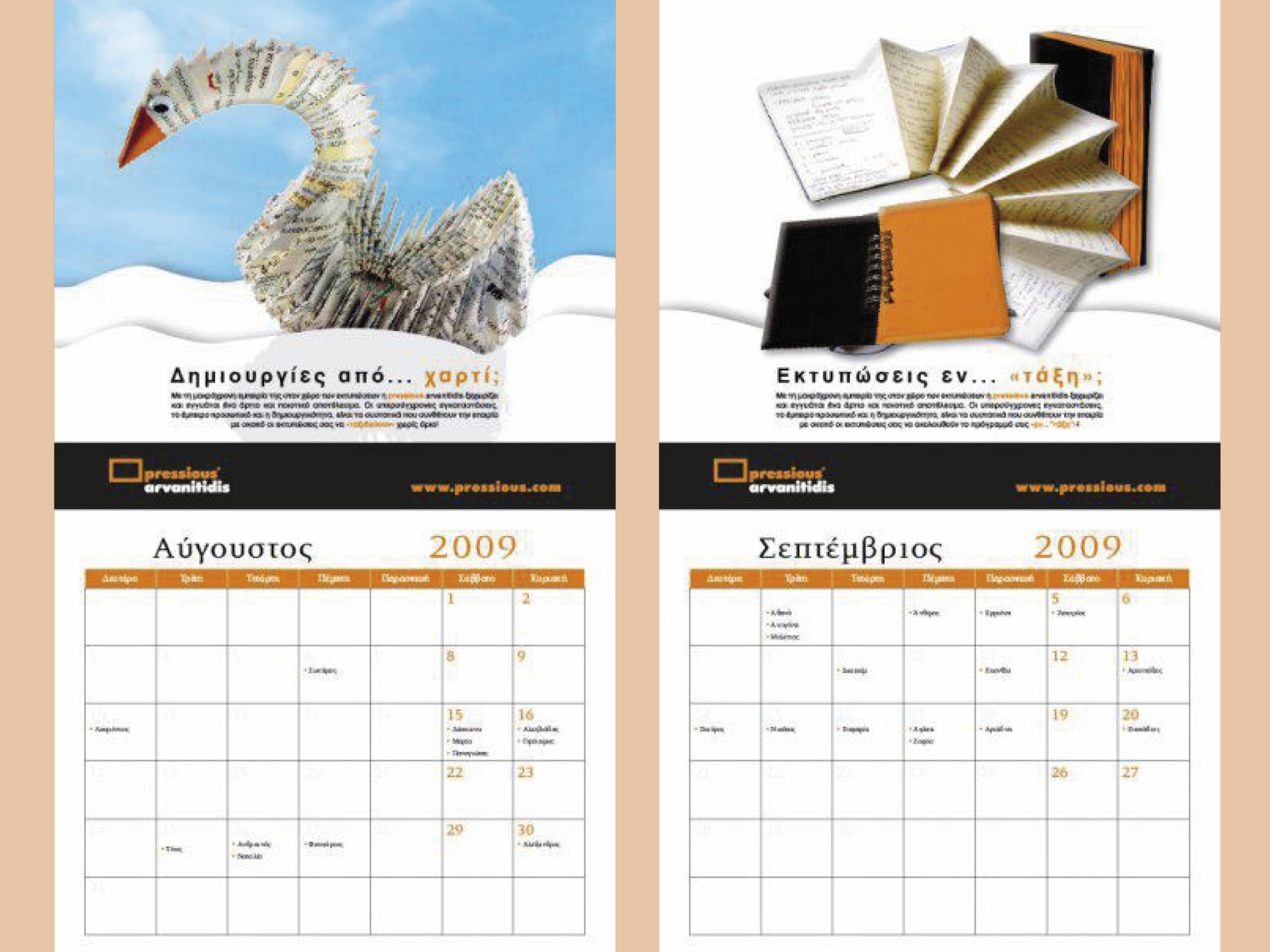
The calendar format reinforces the ritualistic nature of the work. Time becomes structure. Repetition becomes meaning. Each month is a quiet variation on the same material truth: paper is not passive. It remembers.
Before becoming a surface for information or decoration, paper existed as a material shaped by human hands — folded, handled, preserved. Its cultural value lies not only in what it communicates, but in its physical presence, its fragility, and its ability to endure.
In Sacred Paper, paper is elevated from background to subject. Typography does not dominate the surface; it collaborates with it. Words, images, and folds share equal importance. Meaning is constructed through restraint, repetition, and respect for material limits.
Origami functions as a deliberate visual language. It represents discipline, precision, and acceptance — a practice where nothing is removed and nothing is corrected. Each form emerges through a sequence of intentional gestures. This mirrors the logic of refined typographic and print practices.
The calendar format reinforces the ritualistic nature of the work. Time becomes structure. Repetition becomes meaning. Each month is a quiet variation on the same material truth: paper is not passive. It remembers.
Months — Slogans & Symbolic Reading
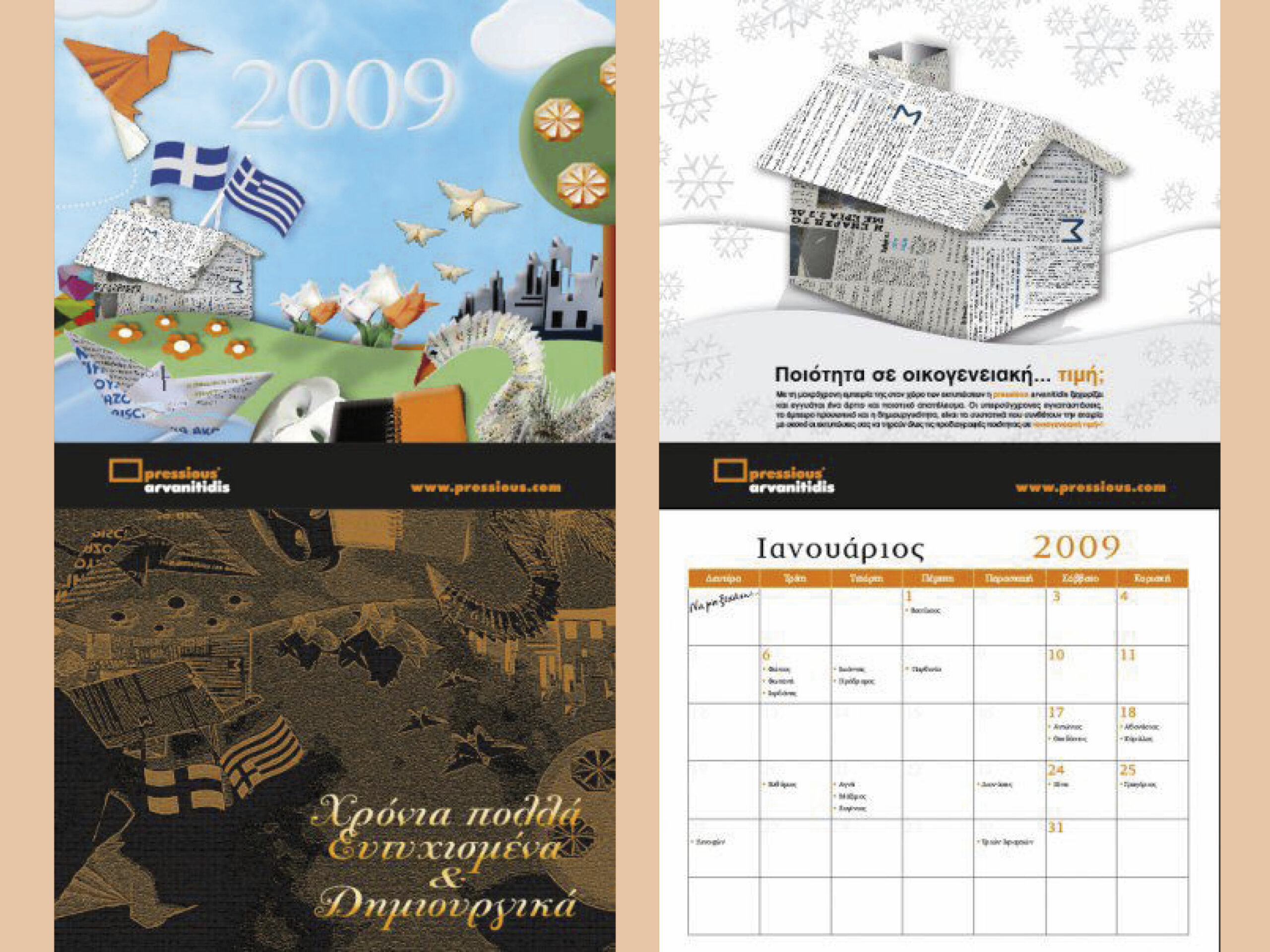
January — Home & Warmth
“Quality you can feel at home with.”
Paper as trust, familiarity, and consistency. Printing that belongs in everyday life — reliable, human, grounded.
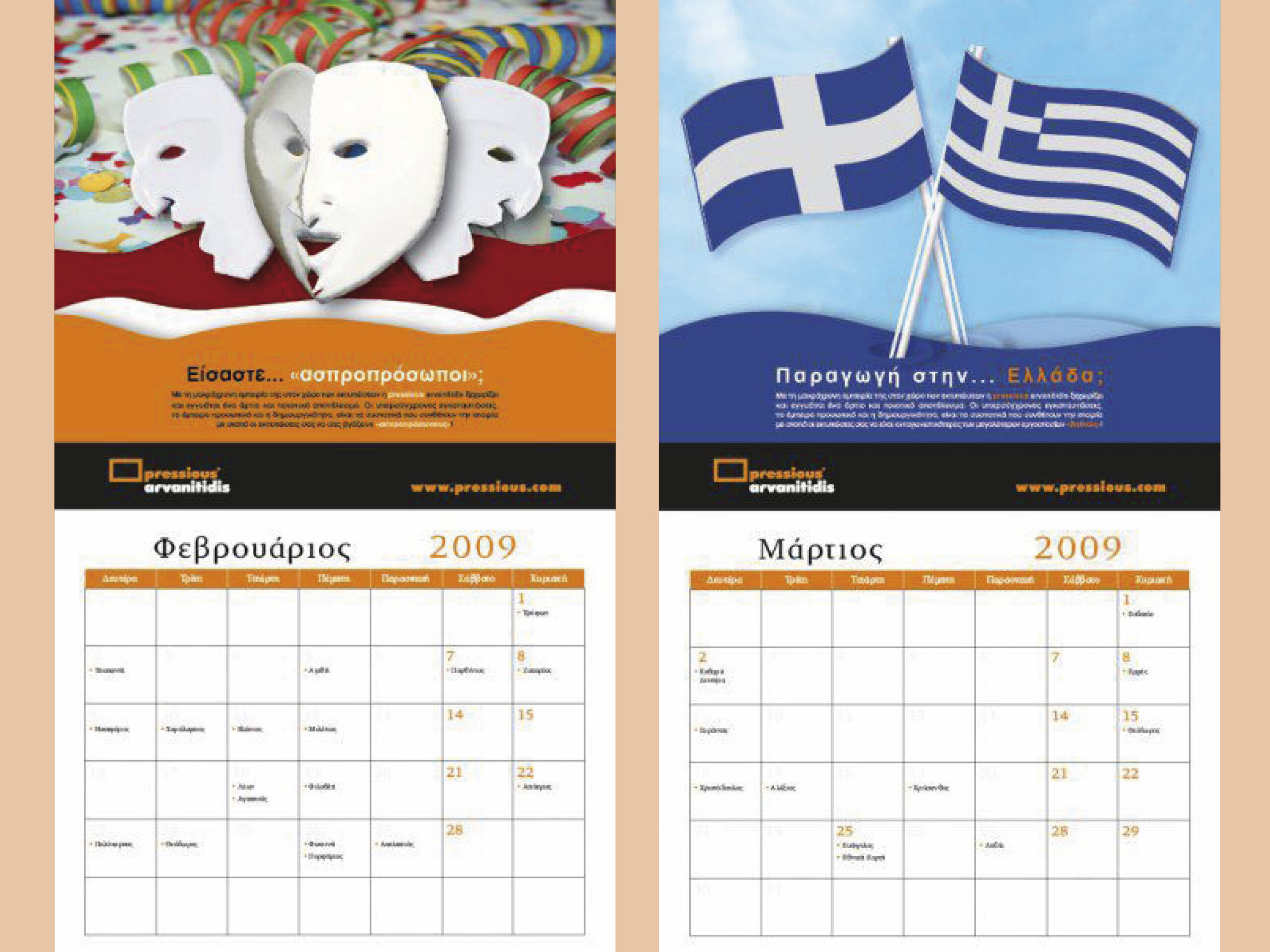
February — Carnival
“No need to apologize for quality.”
Paper masks and bold color speak to confidence. A playful provocation addressed to those responsible for corporate print — quality is not something to justify.
March — National Memory
“Produced in Greece.”
Paper flags as a statement of origin, responsibility, and local production. Light in form, strong in meaning.
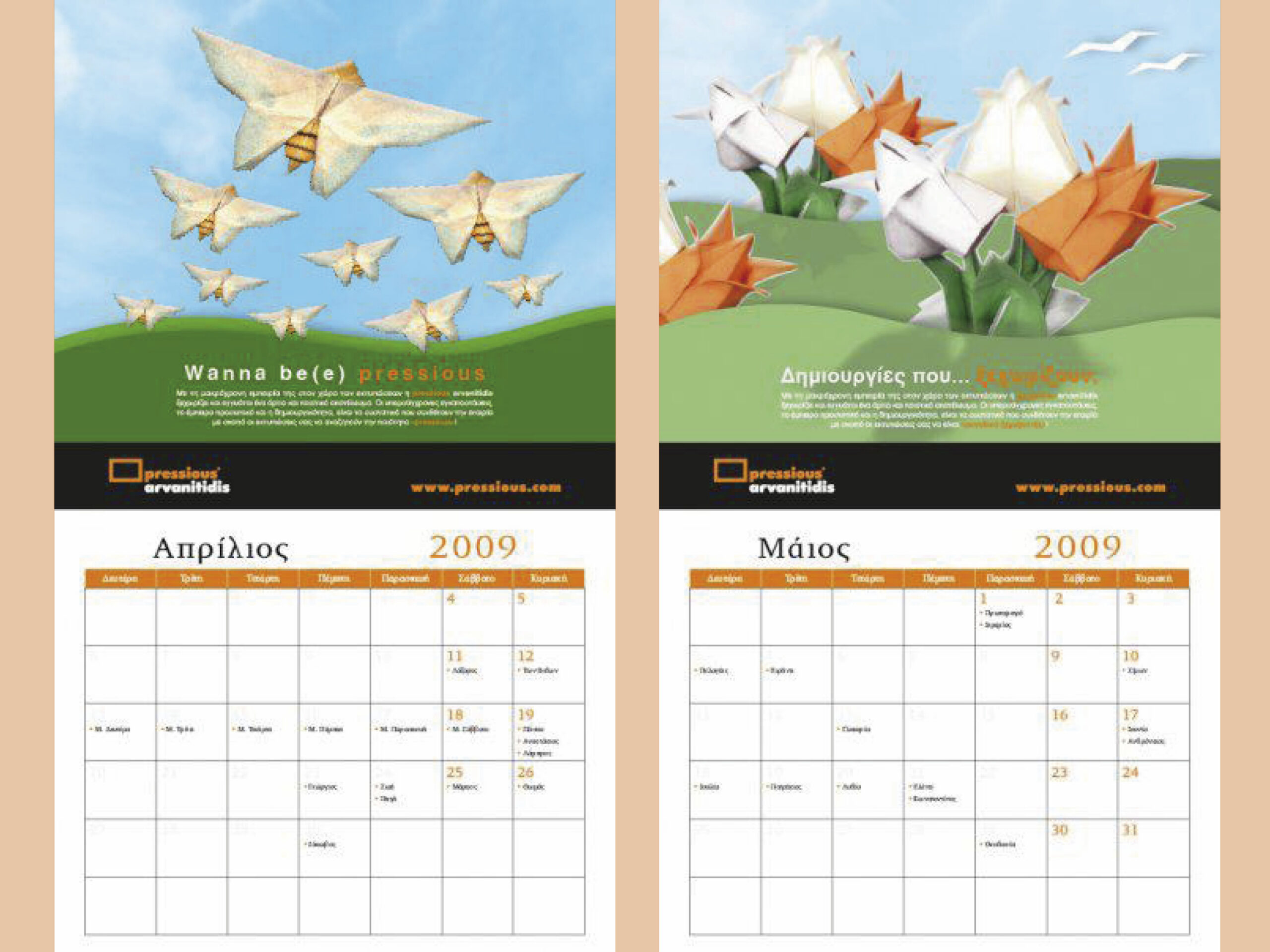
April — Creative Bees
“Wanna be Pressious?”
A visual wordplay between bees, diligence, and the name Pressius. Paper as teamwork, precision, and continuous effort.
May — Bloom
“Creations that stand out.”
Paper flowers as distinct forms. Design that differentiates without noise — clarity through craft.
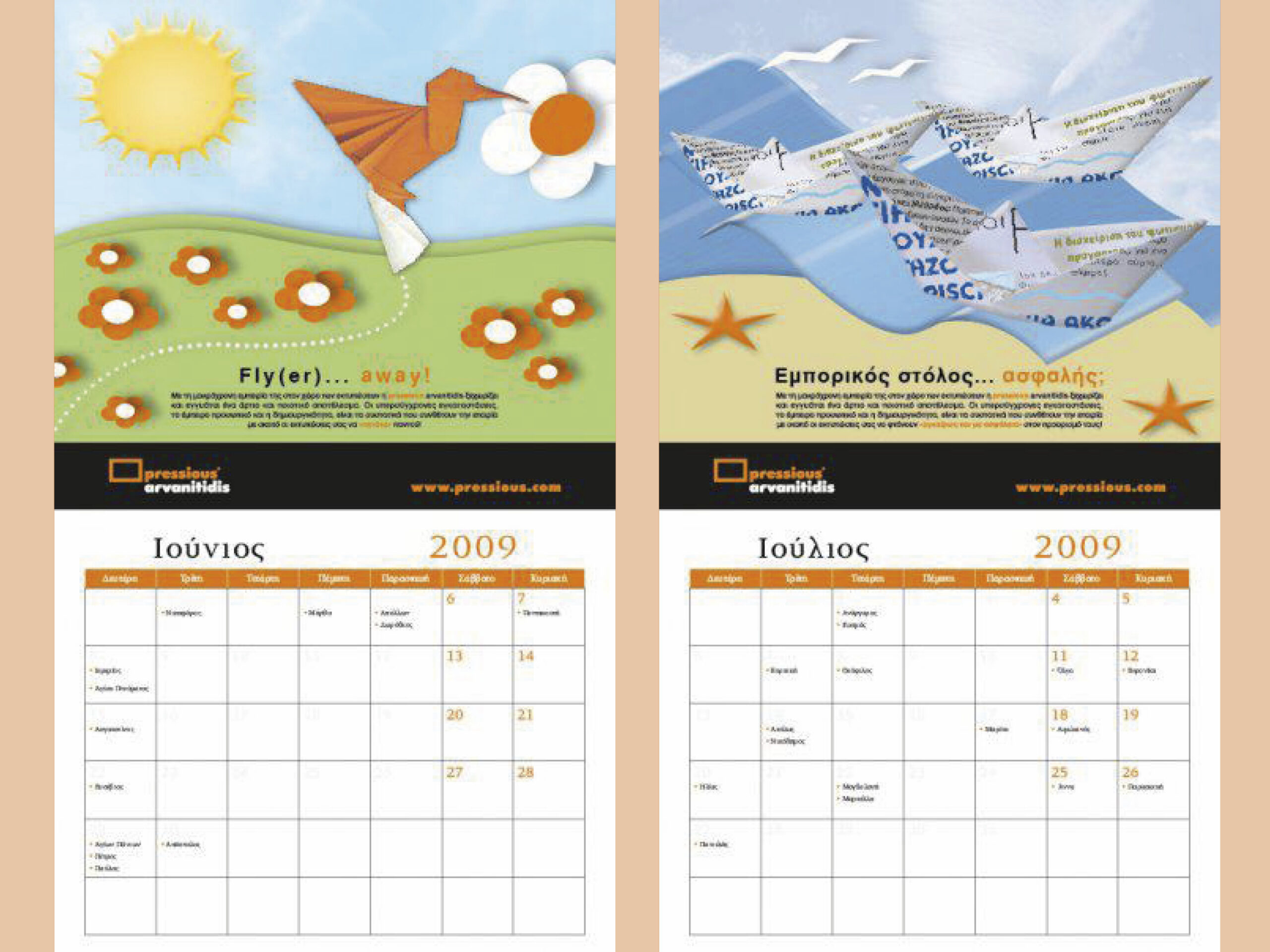
June — Sun & Clear Skies
“Flyer… away!”
A literal and typographic pun. Lightness, distribution, reach. Print that travels.
July — Sea & Boats
“Commercial fleet — safe delivery?”
Paper boats symbolize logistics, reliability, and on-time delivery. Print as a promise kept.
August — Pause & Stillness
“Paper-made creations.”
A quiet nod to the creative department. Paper as pure idea, form, and authorship.
September — Return to Learning
“Printing… in order.”
A double meaning: classroom order and organizational discipline. Structured workflows, clear systems.
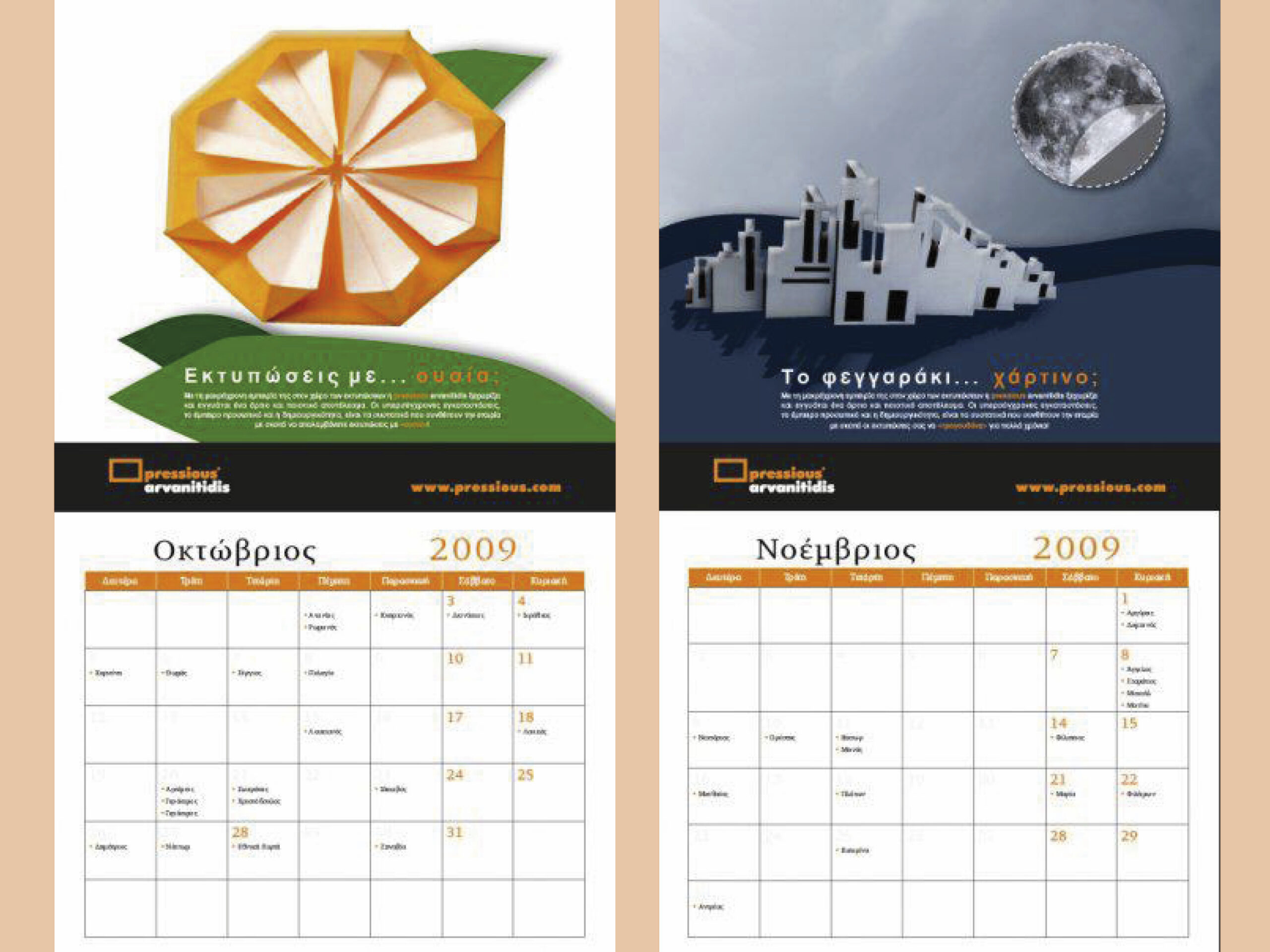
October — Oranges
“Print with substance.”
The orange as essence, content, and value. Printing that goes beyond surface.
November — Nocturnal Melancholy
“A paper moon.”
A poetic reference to the song. Paper as emotion, memory, and night-time reflection.
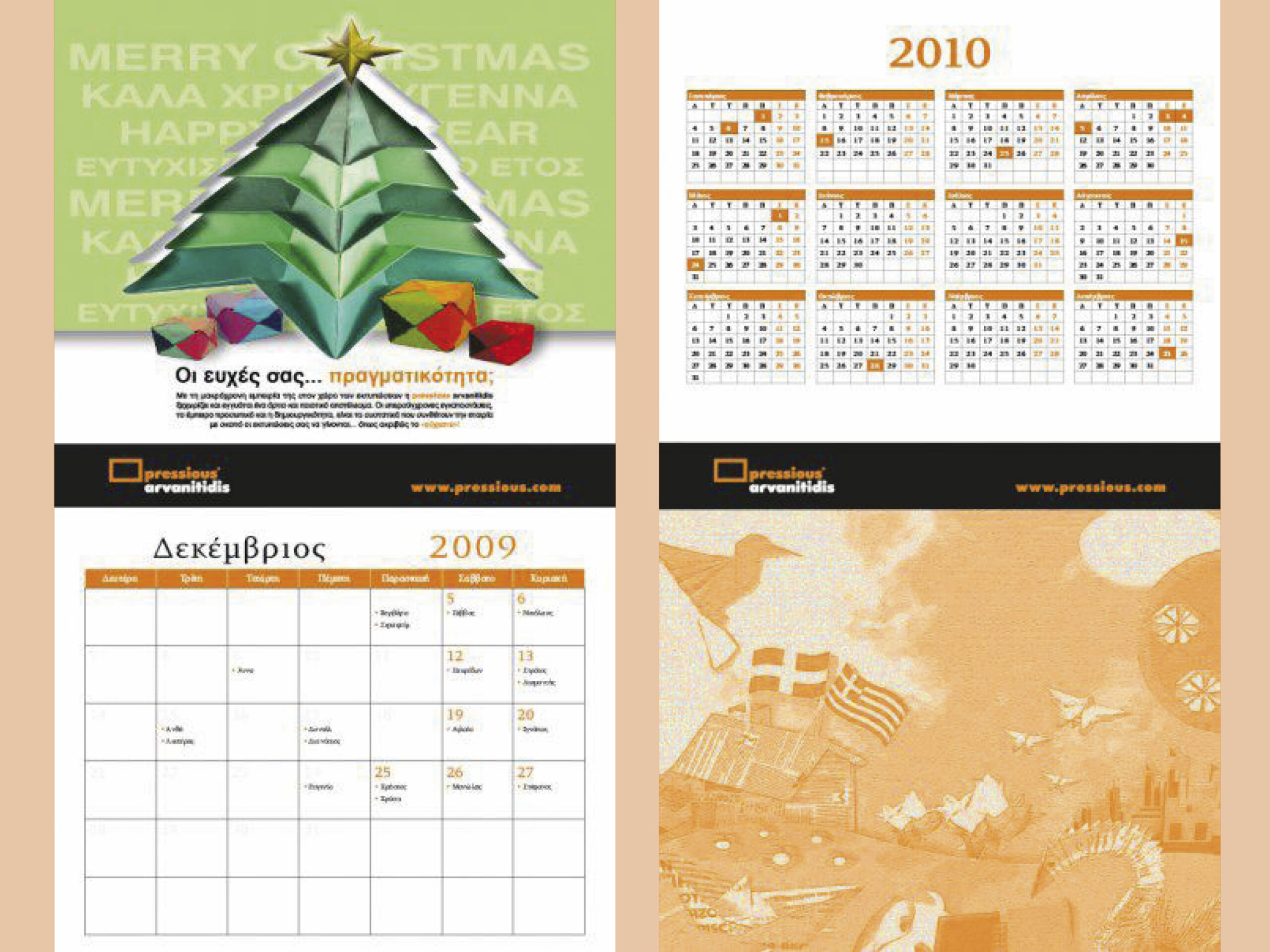
December — Christmas
“Turning wishes into reality.”
Paper as gift, message, and fulfillment. The year closes with intention and warmth.
“Quality you can feel at home with.”
Paper as trust, familiarity, and consistency. Printing that belongs in everyday life — reliable, human, grounded.
February — Carnival
“No need to apologize for quality.”
Paper masks and bold color speak to confidence. A playful provocation addressed to those responsible for corporate print — quality is not something to justify.
March — National Memory
“Produced in Greece.”
Paper flags as a statement of origin, responsibility, and local production. Light in form, strong in meaning.
April — Creative Bees
“Wanna be Pressious?”
A visual wordplay between bees, diligence, and the name Pressius. Paper as teamwork, precision, and continuous effort.
May — Bloom
“Creations that stand out.”
Paper flowers as distinct forms. Design that differentiates without noise — clarity through craft.
June — Sun & Clear Skies
“Flyer… away!”
A literal and typographic pun. Lightness, distribution, reach. Print that travels.
July — Sea & Boats
“Commercial fleet — safe delivery?”
Paper boats symbolize logistics, reliability, and on-time delivery. Print as a promise kept.
August — Pause & Stillness
“Paper-made creations.”
A quiet nod to the creative department. Paper as pure idea, form, and authorship.
September — Return to Learning
“Printing… in order.”
A double meaning: classroom order and organizational discipline. Structured workflows, clear systems.
October — Oranges
“Print with substance.”
The orange as essence, content, and value. Printing that goes beyond surface.
November — Nocturnal Melancholy
“A paper moon.”
A poetic reference to the song. Paper as emotion, memory, and night-time reflection.
December — Christmas
“Turning wishes into reality.”
Paper as gift, message, and fulfillment. The year closes with intention and warmth.
Object & Form
Designed as a three-dimensional object, the calendar takes the form of a pyramid.
Each face presents the monthly visual, while the reverse side reveals the calendar grid beneath a translucent rice-paper layer.
Notes are written directly on the rice paper, allowing time, image, and gesture to coexist on the same surface.
Each face presents the monthly visual, while the reverse side reveals the calendar grid beneath a translucent rice-paper layer.
Notes are written directly on the rice paper, allowing time, image, and gesture to coexist on the same surface.
Typography as a Cultural Act
Pressius Arvanitidis Print House — Sacred Paper
Within the context of Pressius Arvanitidis — Print House, the project Sacred Paper reflects a belief in printing as a cultural act — a craft rooted in patience, intention, and continuity.
The calendar becomes an annual ritual.
Each month a symbolic narrative.
Each image a gesture.
Each sheet a reminder that paper holds memory — and culture.
Printed on specially selected ecological embossed paper, the calendar features dedicated note-taking pages and translucent rice-paper dividers, reinforcing the tactile and ceremonial nature of the object.